
eggverse games to play with friends remotely
By eggverse · · 6 min read
Different cities. Same extremely competitive friend. If your group wants online games to play together remotely, start by choosing what you want to do: race for a finish, build something together, or survive as a team. eggverse is our browser arcade, and this guide helps you choose among its games without turning the evening into a long menu debate.
For a quick decision, try Spoons for passing cards and racing to grab, Lights Out for exploration and rescues, or Shellbound for defending a relic together. Each has a friends mode for two to eight human players. Spoons adds two bots when just two humans play. The games below are from our own catalog; this is not an independent ranking of every online game.
Choose by the kind of evening you want
| Your group wants | Start here | What to explain first |
|---|---|---|
| Competition with one clear turning point | Spoons | After the first spoon goes, everyone can grab |
| Exploration with a reason to stick together | Lights Out | Caught eggs need a friend to relight them |
| Shared jobs and a common objective | Shellbound | Protect the relic while helping cracked teammates |
| Wave survival with a comeback | Spoiled Egg | Cracked teammates return next wave if the crew survives |
All four support two to eight players in their friends rooms. They run in a browser. Check the controls on the game page on the device you plan to use before the group starts; agreeing on a game is only useful if everyone can comfortably play it.
Spoons for the friend who thinks they are paying attention
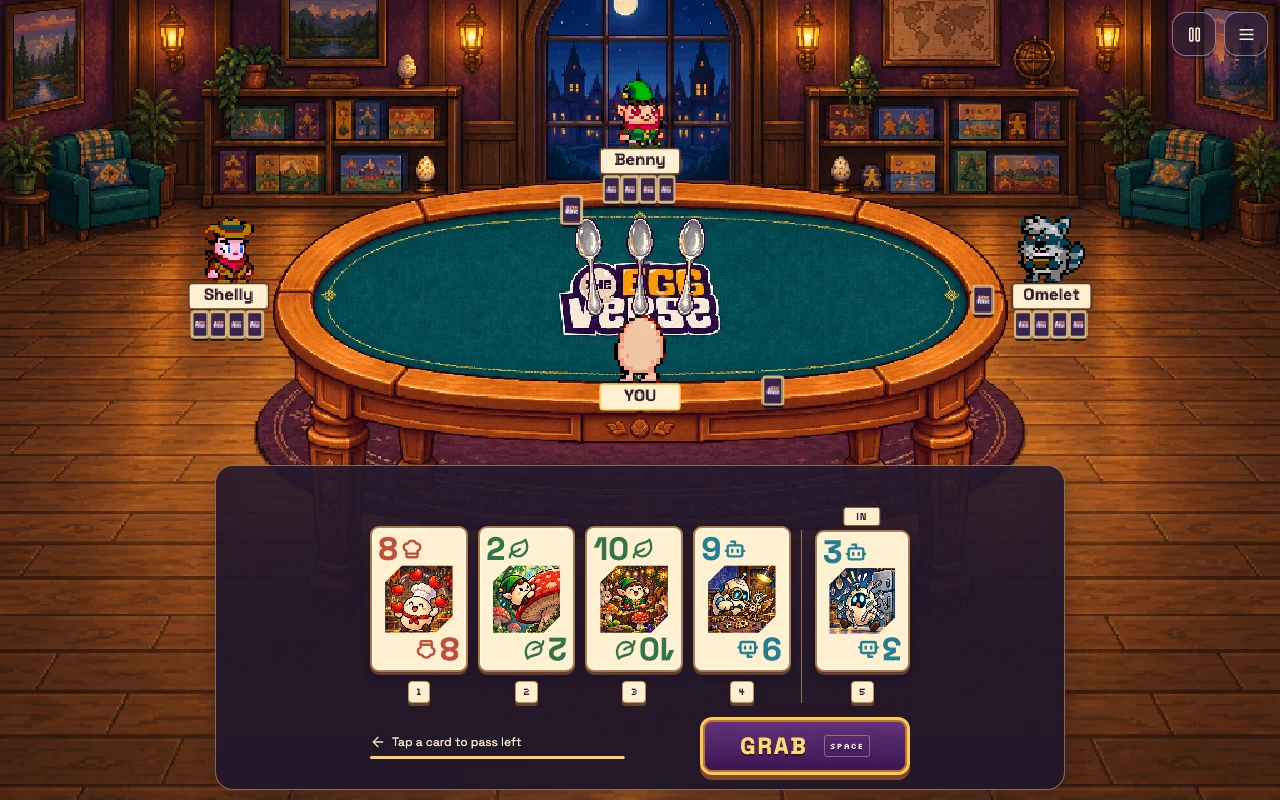
Spoons asks you to collect four cards of the same rank. Pass unwanted cards left as new ones arrive. The player who completes a set can take the first spoon. Once that happens, everyone can grab, matching set or not.
That change is the whole introduction. Explain it before the first game, especially to the friend concentrating so hard on their cards that they forget the spoons exist. Incoming cards automatically pass after four seconds, so nobody can freeze the table while considering their options.
Choose this when your group wants competition and is comfortable with elimination. Missing a spoon or grabbing before you qualify knocks you out. If someone dislikes sitting out, start with a cooperative option instead. Two friends can play with two bots; solo practice uses three bots.
Lights Out when you want to explore together
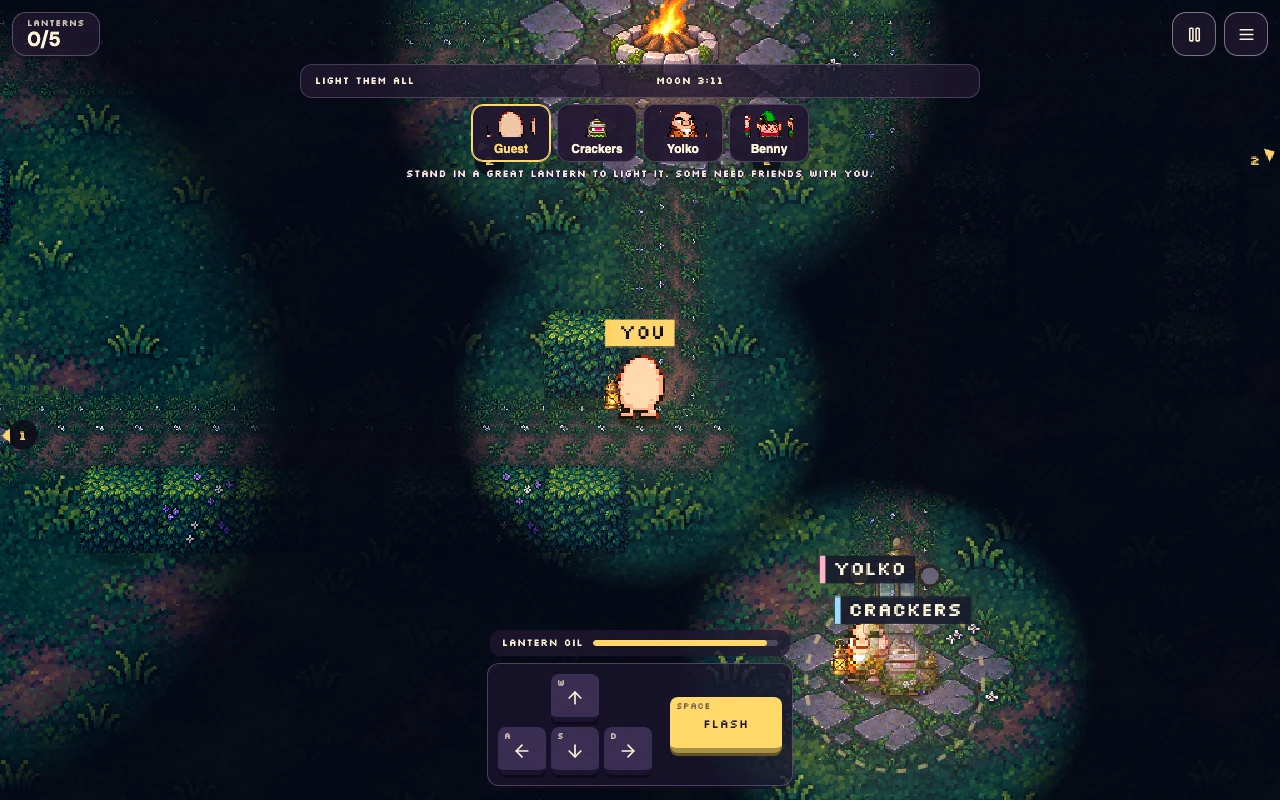
Lights Out sends the crew into a dark garden to relight its great lanterns and escape through the dawn gate. Ghosts appear in the light, your flash can stun them, and some lanterns need friends nearby to relight.
A caught egg waits for a friend to relight them. If nobody reaches them in time, they turn into a ghost; lighting the next great lantern brings them back. That gives your group a practical reason to call out where everyone is going. Decide who is heading back before the entire rescue committee disappears into the same corner.
Choose this if exploring and helping each other sounds better than counting wins. It still involves danger and reactions; cooperative does not mean completely relaxed.
Shellbound when everyone wants a job
In Shellbound, the shared relic matters as much as your own egg. Hunters chase players while siege enemies go after the objective. Standing beside a cracked teammate revives them, but the relic still needs defending during the rescue.
The crew chooses classes, earns personal Scrap and can buy supplies or build defenses around the relic. Pick an upgrade every three waves. After each five wave Night, a boss brings a shared Omen choice: a lasting curse that also raises the Scrap you earn. Ask who will cover the relic while someone visits a station; you do not need a permanent commander to make a plan.
Choose this when friends enjoy reacting to a shared problem. In a two person room, communicate before moving away from the relic because there are fewer eggs available to cover it.
Spoiled Egg for the group that wants one more wave
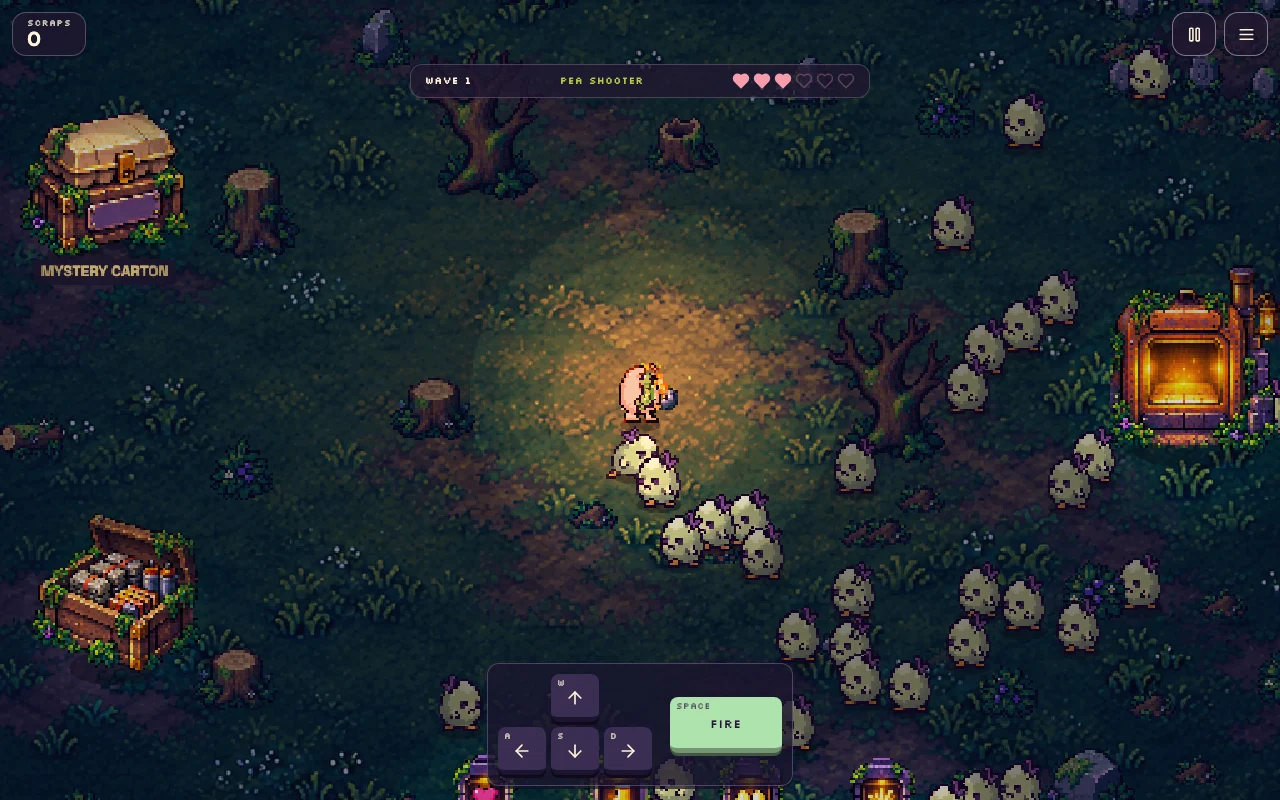
Spoiled Egg is a shared graveyard survival game. A cracked teammate returns at the next wave if the remaining crew survives. When everyone falls, the run ends.
Explain that difference from Shellbound before starting: standing next to someone is not the recovery rule here. Survivors need to make it through the wave. Opening gates also changes the space for both the players and the horde, so call out a new route before spending scraps to open it.
Choose this for friends who enjoy continuing under pressure, including when someone is temporarily waiting to return.
Turn a group chat into the same game
Choose one game and open its page. Use Play with friends, then share the room invitation. The game page link tells friends what you picked; the room invitation gets them into your particular session. Arrange a separate call if you want voice chat.
Before readying up, make sure everyone has joined and can find their controls. Treat the first run as practice. After it, ask one useful question: do we want another go, or a different kind of game? That is enough structure for a casual evening.
For invitations and a fuller plan, use our browser game night guide. This page is your shortlist; that guide helps with the organizing.
Quick answers
Can two friends play these games?
Yes. Each listed friends mode supports two to eight human players. Spoons adds two bots to a two human room.
Which game should we choose if we want to cooperate?
Lights Out, Shellbound and Spoiled Egg all give the group a shared objective. Choose by exploration, defense or wave survival.
What if one friend gets eliminated early?
In Spoons they are out while the remaining players continue. In Lights Out and Shellbound a teammate can help them return; Spoiled Egg uses next wave recovery. Pick the waiting rule your group prefers.
Do we need a game download?
These games run in your browser. Open the game page and check the controls before starting with the group.
Find your first round in Spoons, or take the crew into Lights Out.