
Three laps, then the clock.
By the EggVerse team · · Updated · 2 min read
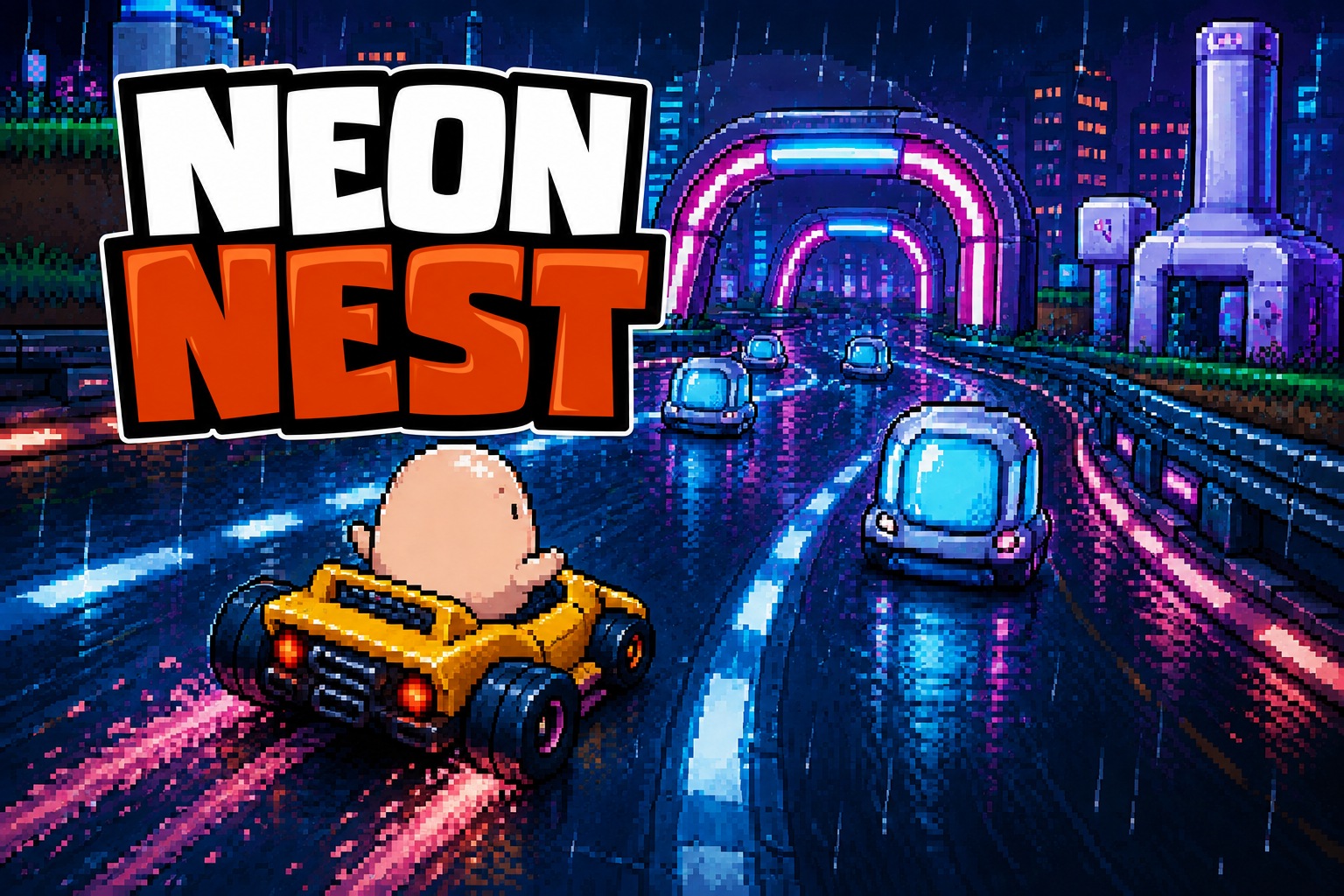
Neon Nest is a three lap kart race for two to eight players on one shared track. When the race ends, players are ranked by where they finished, first across the line is first, regardless of what the clock says. Race time is the tiebreaker, not the headline.
That ordering sounds like a small detail and is not. In a time ranked race, the last lap is a solo exercise: you are chasing a number, and the kart beside you is scenery. Ranking by position makes the last corner the thing that decides the race.
One track, everyone on it
Egg on the Run shows everyone on one screen but keeps the eggs from touching. Neon Nest puts every player on the same road at the same time, item boxes to grab, and all the consequences that follow: being held up, finding a line through traffic, and the difference between third and second coming down to who committed to the inside.
Faster, and honest about laps
Since the September 10 update the race moves about sixty percent faster with sharper acceleration, and the checkered line is drawn only where a lap actually ends. Before that, pacing markers halfway round the course looked like a finish line and were not.
Why time still matters
Two players can finish in the same position across separate rounds, and a group that runs several races wants a way to compare them. Keeping the clock as a tiebreaker gives close finishes a resolution without making the whole race about the stopwatch. Your best solo result is saved on the game's card as position and time.
How many players can race in Neon Nest?
Two to eight, all on the same track. Solo play runs the same three laps against rival karts.
How is the winner decided?
By finishing position. Race time only breaks ties and lets you compare rounds.
What are the Neon Nest controls?
Press W or Up just as GO appears for a launch boost. Steer with Left/Right or A/D; hold Space while steering to drift, then release for a turbo. Use items with Q or E and hold S or Down to look back. On a phone, use the matching Drive, steering, Drift, item and rear view controls.